
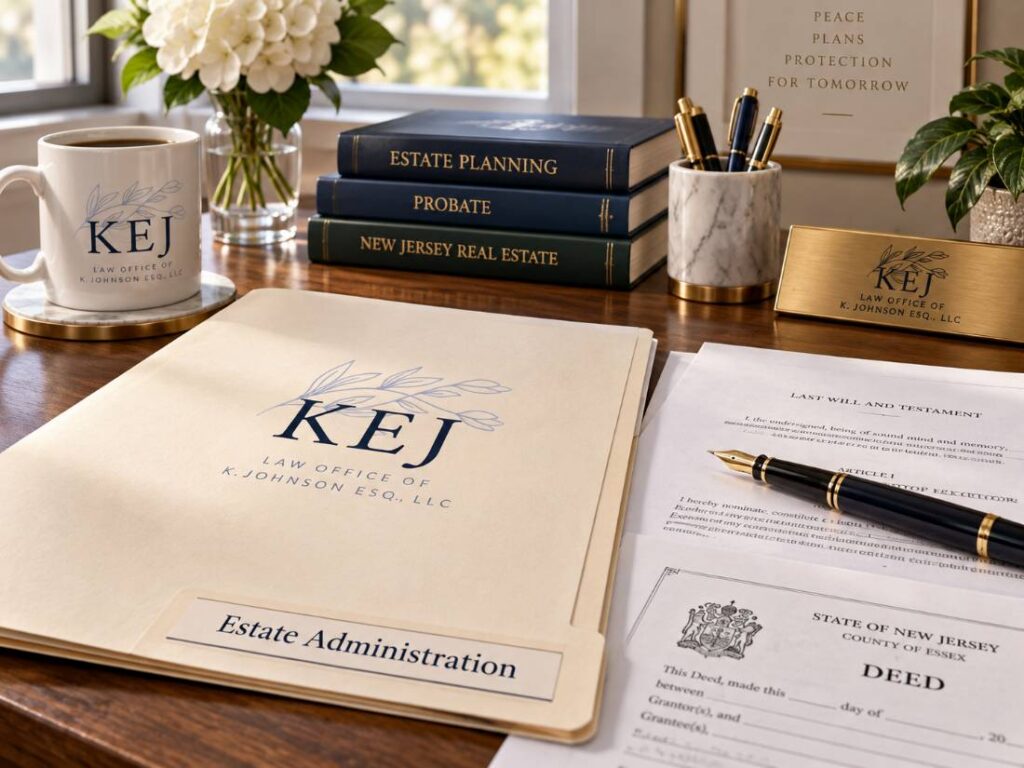
NJ Wills and Estate Administration Attorney
After a loved one passes, families face grief and a stack of unfamiliar paperwork at the same time. The Law Office of Kristen E. Johnson, Esq. has helped families finish that paperwork since 2003. This practice focuses on administration work for estates where everyone agrees on how assets should be divided.
What Estate Administration Means in New Jersey
Estate administration is the legal process of settling a person’s affairs after death. It covers paying final bills, transferring property, and distributing what remains to heirs. In New Jersey, the county Surrogate oversees this process for most estates.
The process starts in one of two ways. When there is a will, the named executor applies to probate it. Probate means the Surrogate confirms the will is valid and formally appoints the executor. When there is no will, a family member applies to serve as administrator instead.
Probating a Will With the County Surrogate
New Jersey law requires a short wait before probate. The Surrogate cannot probate a will until 10 days after the date of death. Families can gather documents during that time.
At the Surrogate’s office, the executor typically presents:
- The original will
- A certified death certificate
- Basic information about heirs and assets
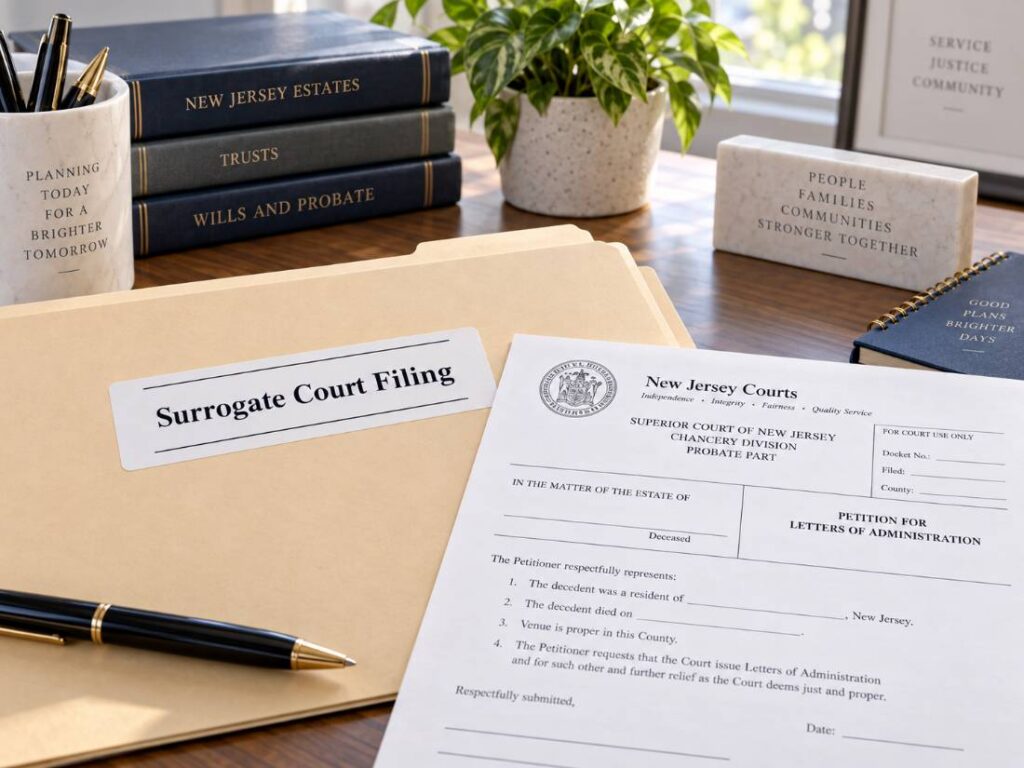
Once approved, the Surrogate issues Letters Testamentary. This document proves the executor has authority to act for the estate. Banks, title companies, and buyers usually ask for it before releasing or transferring anything.
After probate, the executor must mail notice to beneficiaries and certain relatives within 60 days. Proof of that mailing then goes back to the Surrogate.
When Someone Passes Without a Will
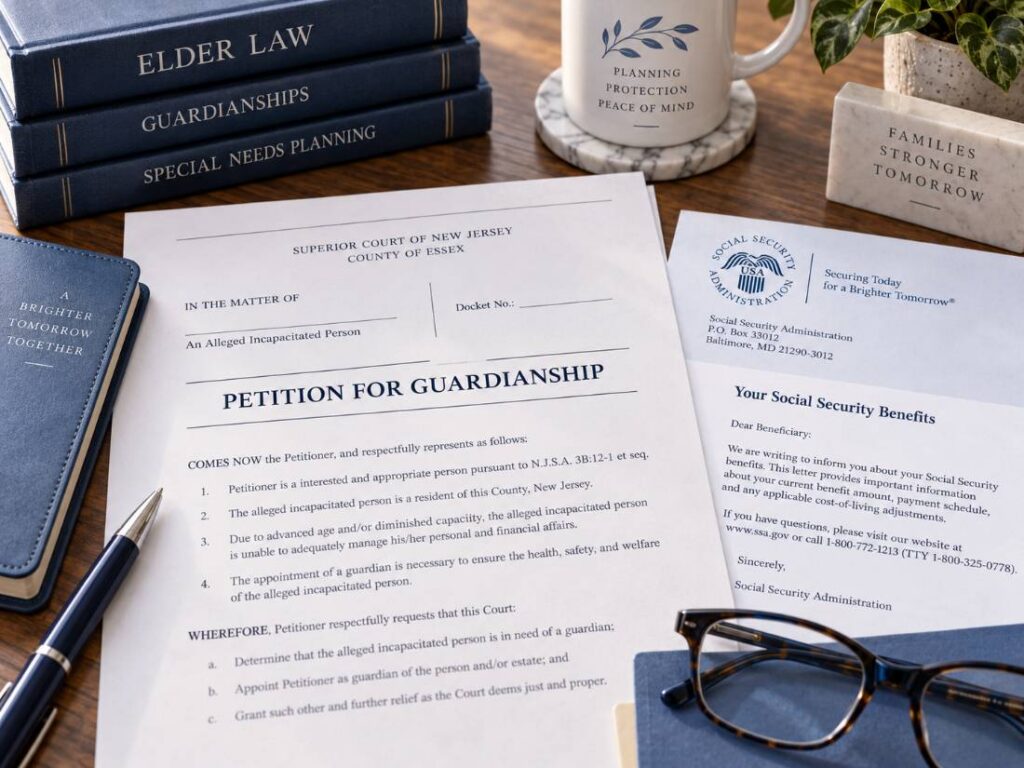
Dying without a will is called dying intestate. New Jersey law then decides who inherits, usually starting with a spouse and children. The Surrogate appoints an administrator by issuing Letters of Administration. Heirs with an equal or higher right to serve often sign a renunciation, which simply steps them aside.
Surviving spouses often have specific questions about the family home. A related article covers NJ property rights when a spouse dies without a will.
Estate Administration Services
Kristen handles the administrative steps families need to finish an estate:
- Preparing and filing Surrogate paperwork
- Guiding executors and administrators through their duties
- Identifying estate assets and outstanding debts
- Obtaining the inheritance tax waivers needed to transfer property
- Preparing executor’s and administrator’s deeds
- Handling the sale of an inherited home
- Completing releases and final distribution paperwork
Where Real Estate and Estates Meet
Most estates include a house, condo, or other property. That is where a real estate background makes a real difference.
Transferring property out of an estate requires a properly drafted deed. An executor’s deed must carry an accurate legal description and show the executor’s authority. A mistake can cloud the title and surface years later, often when heirs try to sell. The deed transfer and preparation page explains how deeds work in New Jersey.
New Jersey also requires an inheritance tax waiver before estate real estate can transfer. For spouses, children, and other close relatives, the state uses a form called the L-9. More distant relatives go through a fuller tax return process first. The waiver is then recorded with the county clerk where the property sits.
Selling an inherited home is common, especially when siblings live in different states. New Jersey law generally lets an executor sell estate real estate without court approval, unless the will restricts it. Kristen handles both the estate side and the closing, so nothing falls between two offices.
Realistic Timelines for Families
Families often ask how long an estate takes. Probate can move quickly once the 10-day wait passes. The rest depends on the assets, tax waivers, and county recording schedules.
Executors usually hold final distributions for nine months after appointment. That window lets creditors present claims against the estate. Deeds must also be recorded with the county clerk, which adds its own processing time. Knowing these timelines upfront helps families plan a move, a sale, or a closing.
Why Families in Monmouth and Ocean County Choose This Office
Kristen Johnson has practiced in Brick, NJ since 2003. Clients work with her directly, backed by a responsive office staff. Each county runs its own Surrogate’s office with its own procedures. Familiarity with both keeps filings accurate and avoids needless delays.
Families from Toms River, Freehold, Lakewood, and Point Pleasant rely on this office for estate work without courtroom stress.
Parents of an adult child with special needs may also need guardianship. That work has its own page: NJ adult guardianship attorney.
Frequently Asked Questions
Most estates with assets in the deceased person’s name alone need some Surrogate involvement. Jointly owned property and accounts with named beneficiaries often pass outside that process.
The Surrogate cannot probate a will until 10 days after the date of death. Families can prepare paperwork during that time.
This office handles estates where beneficiaries agree on distribution. Disputes among heirs require litigation counsel.
In most cases, yes. New Jersey law generally allows an executor to sell estate real estate unless the will limits that power. Inheritance tax waiver rules still apply to the sale.
An executor’s deed transfers real property from the estate to heirs or a buyer. It must include an accurate legal description and reflect the executor’s authority.